
The best time to visit Johannesburg
Johannesburg has dry, sunny winters and wet summers with thunderstorms, and both seasons work for a city trip. For a safari in Kruger, the dry months from April to September are the better choice.
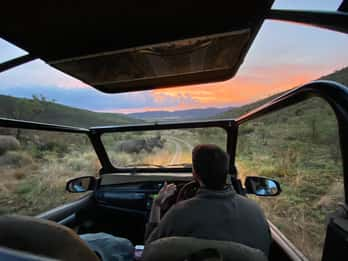
Pilanesberg day safari with two game drives
Full day, 2 open-vehicle game drives · About 12 hours
✓ Free cancellation
from R 2,995
Book on GetYourGuide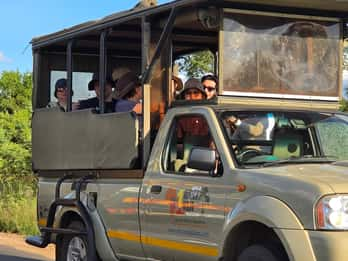
Three-day Kruger safari with a lodge in Hazyview
3 days, 2 nights, bungalow or chalet · 3 days
✓ Free cancellation
from R 13,252
Book on GetYourGuide
Sunrise balloon flight over the Magalies River Valley
Shared balloon at sunrise, about 1 hour aloft · 3 to 4 hours
✓ Full refund up to 6 days before; 50% refund 2 to 6 days before
from R 4,377
Book on Viator
Johannesburg sits on the Highveld plateau at about 1,700 m, and the height shapes its weather. The South African government notes that the altitude keeps average summer temperatures below 30 °C, and that the whole country apart from the Western Cape gets its rain in summer. The seasons run the opposite way to Europe and North America: summer from about October to March, winter from May to August. The figures on this page are long-term averages from the South African Weather Service, measured near O.R. Tambo Airport.
Winter, the dry season
From May to August, rain is rare. June has about 9 mm and two rainy days on average, July 4 mm and a single day. Days are clear and mild, with average highs of 16 to 19 °C, but the nights are cold: the average low in June and July is 4.1 °C, and the government notes that winter nights can drop to freezing point or below in some places. Pack a warm layer for the evenings.
For sightseeing in the city, this is the easiest time of year. Walking tours in Soweto and the inner city rarely meet rain, and the long dry spell suits the drive out to Pilanesberg, about two hours from Johannesburg. Early game drives are the cold part of the day. The operator of the Pilanesberg day safari picks guests up between 06:00 and 06:30 and asks them to bring a jumper for the open vehicle, but to dress light for the warm afternoon.
Spring and the jacarandas
September and October bring warmer days, with average highs of 22.8 °C and 23.8 °C, while the rain only starts to pick up in October. This is when the jacarandas flower. In Pretoria, which the University of Pretoria and South African Tourism call the Jacaranda City, the bloom lasts from late September through October and sometimes into early November. The university counts about 65,000 mature trees in the city, originally from Brazil. In Johannesburg, the avenues around Westcliff turn purple in October. The Pretoria page covers a half-day visit from Johannesburg.
September is also the month for two big events in Sandton: the Standard Bank Joy of Jazz festival and the FNB Art Joburg fair are both held there each year. The dates for 2027 had not been published in November 2026.
Summer rain and storms
From October to March, Johannesburg gets more than four fifths of its yearly rain of about 713 mm. January is the wettest month, with 125 mm and around 16 days of rain, and November and December are close behind. Days are warm rather than hot: the average highs stay between 24 and 26 °C. Thunderstorms can be severe. In March 2026, the South African Weather Service warned of storms in northern Gauteng with local flooding, damage and power disruptions, so check the warnings on the day if you plan to drive.
Summer is the green season on the Highveld, and the city tours, museums and markets carry on as usual. Rain gear is the main change; the weather and what to wear page has the month-by-month figures.

When to go on safari
For Kruger, the season matters more than for the city. SANParks describes the winter from April to September as extremely pleasant, with warm dry days and cold nights, and names it the best time for game viewing, because the bush is thinner and animals gather at the water. The summer from October is hot and rainy, and the denser foliage makes animals harder to see. Seeing particular animals is never certain in any month.
Malaria is the second reason. The German Federal Foreign Office and the German Society for Tropical Medicine list a seasonal high risk from September to May in the north-east of Limpopo and Mpumalanga, including Kruger, so the winter months are also the lower-risk period. Pilanesberg is described by the Pilanesberg Wildlife Trust as malaria-free. Ask a doctor about prevention before a trip to Kruger; the Kruger safari page has more.
Kruger’s gates follow the daylight. In the summer months, SANParks opens the entrance gates at 05:30 and closes them at 18:30; from May to July they open at 06:00 and close at 17:30, and SANParks does not allow driving in the park outside these times.
Balloon flights at sunrise
Balloons over the Magaliesberg and the Cradle of Humankind fly in the cool, still air of the early morning. South African Tourism explains that almost all flights start before sunrise, that ballooning is a seasonal activity, and that bad weather on any day can rule out a flight even in season. Bill Harrop’s asks guests to arrive at its launch site near Skeerpoort, about an hour from Johannesburg, before sunrise. Plan the flight early in your stay, so that a cancelled morning can be moved. Details are on hot-air balloon flights.
Public holidays and school terms
Some dates change what is open. Youth Day on 16 June marks the Soweto uprising of 1976, and the Hector Pieterson Museum is free on that day. Constitution Hill lets visitors in for free on Human Rights Day (21 March), Freedom Day (27 April), Youth Day, National Women’s Day (9 August), Heritage Day (24 September) and the Day of Reconciliation (16 December). When a public holiday falls on a Sunday, the Monday after it is a holiday too.
The public school calendar is the same across the country. In 2027, the terms run from 13 January to 19 March, 6 April to 25 June, 20 July to 22 September and 5 October to 8 December; the 2026 school year ends on 9 December. Private schools follow their own dates. For the remaining public holidays of 2026 and those of 2027, see the government’s list.
All tours side by side
Outings that depend most on the season, from a sunrise balloon flight near Hartbeespoort to safaris in Pilanesberg and Kruger.
| Tour | Format | Duration | Age | Rating | From |
|---|---|---|---|---|---|
| Pilanesberg day safari with two game drivesMoAfrika ToursAfter pickup between 6 and 6:30 am, a guide takes you on a morning and an afternoon drive in an open vehicle, with a light lunch at the Pilanesberg Centre in between. | Full day, 2 open-vehicle game drivesPickup and drop-off in Johannesburg, two open-vehicle game drives, light lunch; park conservation fee not included, paid at the gate | About 12 hoursPickup in Johannesburg or Pretoria | Not for children under 4; children up to 5 need a private tour | 4.8 (1,650 reviews) | From R 2,995Free cancellationBook on GetYourGuide |
| Sunrise balloon flight over the Magalies River ValleyBill Harrop’s “Original” Balloon SafarisFrom a private launch site near Skeerpoort, west of Hartbeespoort Dam, a shared flight of about one hour is followed by sparkling wine and a buffet breakfast at the clubhouse. | Shared balloon at sunrise, about 1 hour aloftHot drinks and biscuits, flight of about one hour, sparkling wine or orange juice, buffet breakfast, certificate; transport not included | 3 to 4 hoursLaunch site near Skeerpoort, no transport | Moderate fitness needed; not recommended for pregnant travellers or people with spinal injuries | 4.9 (432 reviews) | From R 4,377Full refund up to 6 days before; 50% refund 2 to 6 days beforeBook on Viator |
| Three-day budget Kruger safari in tentsViva SafarisThe trip combines a sunset and night drive from Tremisana, a bush barbecue, a night in platform tents at the unfenced Campfire Academy, a full day in Kruger from Orpen, a bush walk and the Blyde River Canyon. | 3 days, 2 nights, tentsEntrance and conservation fees, breakfasts and dinners, two nights in a tent, all game drives and bush walks, pickup at O.R. Tambo or Johannesburg hotels; lunches not included | 3 daysPickup at Johannesburg hotels or O.R. Tambo; airport transfers leave by 9:30 am | Lions and elephants move freely through the camp; a lodge room is available instead | 4.6 (196 reviews) | From R 10,495Free cancellationBook on GetYourGuide |
| Three-day Kruger safari with a lodge in HazyviewAfrica Moja Tours & SafarisTravelling via Elands Valley and Nelspruit, the tour combines morning and afternoon drives in an open vehicle in Kruger, with the first night at Tembo Guest Lodge in Hazyview. | 3 days, 2 nights, bungalow or chaletPickup and drop-off at hotels and Johannesburg Airport, national park and game drive fees, bungalow or chalet; food and drinks only where stated | 3 daysPickup in Johannesburg, Pretoria, Centurion, Midrand, Sandton or East Rand | Not suitable for pregnant travellers; malaria risk mainly February to May | 4.7 (137 reviews) | From R 13,252Free cancellationBook on GetYourGuide |
Prices and ratings come from the booking platform and are shown per person. If you book through these links we earn a commission. Your price stays the same. Sorted by number of reviews.
Questions travellers ask
What is the best month to visit Johannesburg?
For dry weather, May to August: the long-term averages show 4 to 13 mm of rain and one to three rainy days a month. Days are mild at 16 to 19 °C, but nights drop to around 4 °C. September and October add warmer days and the jacaranda bloom.
When is the rainy season in Johannesburg?
From October to March. November, December and January each have around 15 days with rain in the long-term averages, and the South African Weather Service issues warnings for severe thunderstorms in Gauteng.
When is the best time for a safari in Kruger?
SANParks names winter, from April to September, as the best time for game viewing, because the vegetation is thinner. Summer from October is hot and rainy, and the dense bush makes animals harder to see.
When do the jacarandas bloom?
In Pretoria from late September through October, sometimes into early November, according to the University of Pretoria. In Johannesburg the avenues turn purple in October.
Is there malaria in Johannesburg?
The German Federal Foreign Office lists a seasonal high risk from September to May only for the north-east of Limpopo and Mpumalanga, including Kruger. Pilanesberg is described as malaria-free. Ask a doctor before a trip to Kruger.
Where these facts come from
Dates, opening hours and rules change. We checked these pages in November 2026; the official source has the final word.
- WMO World Weather Information Service: Johannesburg (data from the South African Weather Service)
- South African Government: Geography and climate
- SAnews: SAWS warns of severe thunderstorms in Gauteng, Mpumalanga
- University of Pretoria: Purple reign, jacarandas paint Pretoria’s streets
- NPR via Maine Public: Greetings from Johannesburg (5 November 2025)
- SANParks: Kruger climate
- SANParks: Top 3 national parks for winter game viewing
- Auswärtiges Amt: Südafrika, Reise- und Sicherheitshinweise (as of 8 November 2026)
- Pilanesberg Wildlife Trust: About Pilanesberg
- South African Tourism: Hot-air ballooning in South Africa
- Bill Harrop’s Original Balloon Safaris: Magalies River Valley scenic balloon safari
- South African Government: Public holidays
- Department of Basic Education: 2027 school calendar (PDF)
- City of Johannesburg: Hector Pieterson Museum receives award (May 2024)
- Constitution Hill: Opening hours and admission
- Tour pages on GetYourGuide and Viator, checked 8 November 2026

