
Is Johannesburg safe?
Crime in Johannesburg is high, and every government that publishes travel advice asks visitors to take care. Most risks can be reduced with a few habits: an organised pickup, a locked car, an app instead of a street taxi and a guide for townships and the city centre.
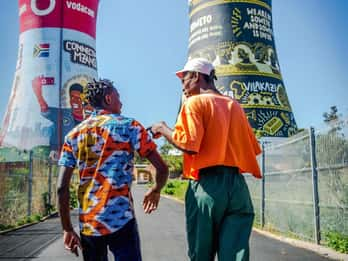
Soweto walking tour with kota lunch
Half day, walking, minibus taxi ride · About 4 hours
✓ Free cancellation
from R 700
Book on GetYourGuide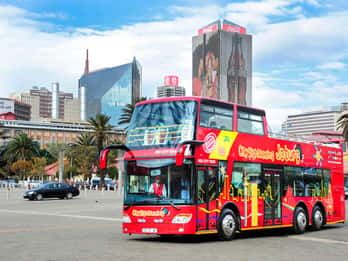
Hop-on hop-off bus with optional Soweto tour
1 or 2-day bus ticket, optional Soweto walk · 1 or 2 days; the full bus loop takes at least 3 hours
✓ Free cancellation
from R 425
Book on GetYourGuide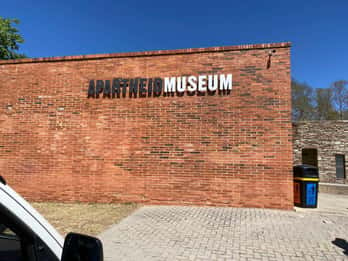
Constitution Hill, Soweto and Apartheid Museum full day
Full day, guided drive · About 8 hours, ends at 5 pm
✓ Free cancellation
from R 1,615
Book on GetYourGuide
Crime is a real factor in planning a trip to Johannesburg. The German Federal Foreign Office states that South Africa’s crime rate remains very high in 2026. This page sets out what four governments advise, as of November 2026, and turns it into practical habits. It does not give crime statistics, because none of these sources publish figures for visitors. Check the advice again shortly before you travel, as it can change at short notice.
What the governments advise
The US State Department puts South Africa at Level 2, “exercise increased caution”, in an advisory issued on 27 May 2025 and still current in November 2026. It warns that violent crime is more common in the downtown areas of big cities, especially after dark. Canada asks travellers to exercise a high degree of caution (update of 6 November 2026) and names Johannesburg’s train station and the area around it as dangerous because of high crime.
The UK Foreign Office (updated 5 November 2026) does not issue levels. It says that most violent crime occurs in townships, informal settlements and other high-density areas, and that you should only go to a township with a responsible and reliable tour guide. The German Federal Foreign Office (as of 8 November 2026, unchanged since 28 October) goes furthest for Johannesburg: it advises against visiting the city centre, the CBD, regardless of the time of day, and against township visits other than organised tours with local guides. It also warns of unrest in the CBD when national “shutdowns” are called at short notice.
In practice, the four advisories overlap more than they differ: see the city centre and townships with a guide, and take the precautions below everywhere else.
Arriving at O.R. Tambo
The British and US governments both report that criminals have followed travellers from O.R. Tambo International Airport and robbed them, often at gunpoint, when they reached their home or hotel. The UK advice is to leave the public areas of the airport promptly and to arrange your pickup in advance. Do not accept offers of transport inside the terminal. Airports Company South Africa has accredited metered taxis against touting, which you can book at its information desk in the terminal.
The German Federal Foreign Office adds that checked luggage is sometimes opened without authorisation, so keep valuables and documents in your hand luggage. Transfers booked ahead are covered on airport transfers.
In the car
Smash-and-grab thefts, where a window is broken or a door opened at a red light or in slow traffic, are common according to both the German and UK governments. Keep doors locked, windows closed and bags, phones and cameras out of sight, for example in the boot. The UK advice mentions smash-and-grab film on the windows, which rental companies can supply, and suggests keeping the tank more than half full.
Carjacking and robbery are more frequent after dark, the UK government says, and the German Federal Foreign Office names quiet intersections at night in particular. Both the German and US governments advise against driving between towns after dark, also because of potholes, animals and broken-down vehicles on the roads. Traffic drives on the left. In Kruger and Pilanesberg, the park rules apply: SANParks only lets visitors leave their car at designated places, and the gates close at night.
Taxis and ride-hailing
The German Federal Foreign Office recommends ordering taxis only from known companies and using verified ride-hailing apps such as Uber and Bolt. Do not flag down taxis in the street, do not hitchhike and avoid minibus taxis. The UK government says that tensions between app drivers and metered taxi drivers have led to armed violence and deaths, and asks travellers to book only through the official app of an internationally known service; Canada reports the same conflict. The getting around page covers the Gautrain and buses.
Cash, cards and phones
The German Federal Foreign Office warns of tampered ATMs and distraction tricks, and advises using machines inside shopping centres, supermarkets or banks rather than on the street. The UK government describes card skimming and confidence scams as widespread: cover your PIN, do not accept help at the machine, and exchange larger amounts only at banks or in secure malls. Canada also reports card and ATM fraud.
Power cuts can affect security too. South Africa marked 300 days without load shedding in March 2026, but the UK Foreign Office notes that cuts can still happen and affect accommodation, ATMs, traffic lights and security systems.
Why guided tours are the norm here
All four governments give the same advice for townships, and the German one extends it to the inner city. That is why most visitors see Soweto, Maboneng or Hillbrow on a tour rather than alone. On the Soweto walking tour, the guide grew up in the area and meets guests at Vilakazi Espresso in Orlando West, where the operator says free, safe parking is nearby. Soweto is a large residential area, not a backdrop: tours walk along ordinary streets, so ask before taking photos of people.
The inner city is similar. The street art walk starts at Arts on Main at 264 Fox Street in Maboneng, and several reviewers who were unsure about the neighbourhood say they felt safe with the guide. For a first look without walking, the hop-on hop-off bus leaves from Rosebank and stops at Constitution Hill and the Apartheid Museum; riders describe it as an easy way to get oriented. A full-day tour with hotel pickup links Constitution Hill, the old city centre, the Apartheid Museum and Soweto in one day. More options are on Soweto tours and walking tours.
A short checklist
- Book the airport pickup before you fly, and leave the arrivals hall without lingering.
- Keep car doors locked and nothing visible on the seats, and avoid long drives after dark.
- Use a ride-hailing app or a known taxi company, never a car offered in the street.
- Take cash from ATMs inside banks or shopping centres, and cover your PIN.
- Visit Soweto, other townships and the CBD with a guide.
- Read the current advice of your own government a few days before departure.
All tours side by side
Ways to see Soweto and the inner city with a local guide or on a fixed bus route, the way the travel advisories recommend.
| Tour | Format | Duration | Age | Rating | From |
|---|---|---|---|---|---|
| Hop-on hop-off bus with optional Soweto tourCity Sightseeing South AfricaOpen-top double-decker buses run two routes with stops such as Melrose Arch, Constitution Hill, the Apartheid Museum and Gold Reef City, with audio commentary in eight languages and an optional two-hour Soweto walk. | 1 or 2-day bus ticket, optional Soweto walkAudio commentary in 8 languages, live bus tracking, Wi-Fi, map, headsets, shuttle from selected Sandton hotels, Soweto walk if chosen; entrance fees not included | 1 or 2 days; the full bus loop takes at least 3 hoursCity Sightseeing office, The Zone mall, Oxford Road, Rosebank | – | 4.7 (1,228 reviews) | From R 425Free cancellationBook on GetYourGuide |
| Soweto walking tour with kota lunchOne Day AfricaA guide who grew up in Soweto walks from the Hector Pieterson Memorial along Vilakazi Street past the Mandela and Tutu houses, stops for a kota lunch, then rides a minibus taxi to Orlando East and the Orlando Towers. | Half day, walking, minibus taxi rideLocal guide, kota lunch, bottled water; Mandela House entry optional, paid on the day | About 4 hoursVilakazi Espresso, 7346 Kumalo Street, Orlando West | Stroller accessible; not suitable for wheelchair users | 4.9 (859 reviews) | From R 700Free cancellationBook on GetYourGuide |
| Constitution Hill, Soweto and Apartheid Museum full dayKilimanjaro Travel and Tour SAThe day covers the Old Fort on Constitution Hill, the old city centre, the Apartheid Museum and Soweto, with a stop at the Mandela House. | Full day, guided driveHotel pickup and drop-off, air-conditioned vehicle, guide, Apartheid Museum and Hector Pieterson Memorial entry, all entry tickets for the activities; food not included | About 8 hours, ends at 5 pmHotel pickup in Johannesburg | Not suitable for pregnant travellers | 4.8 (645 reviews) | From R 1,615Free cancellationBook on GetYourGuide |
| Maboneng and Jewel City street art walkOne Day AfricaStarting at Arts on Main, a local guide walks the mural corridors of Maboneng and Jewel City, explains the pieces and the area’s industrial past, and introduces local artists along the way. | 2 hours, walking on flat streetsLocal guide, guided walk; gallery entry optional, paid on the day | 2 hoursHome of the Bean café, Arts on Main, 264 Fox Street, Maboneng | Stroller accessible; not suitable for wheelchair users | 4.9 (307 reviews) | From R 600Free cancellationBook on GetYourGuide |
Prices and ratings come from the booking platform and are shown per person. If you book through these links we earn a commission. Your price stays the same. Sorted by number of reviews.
Questions travellers ask
Is it safe to visit Soweto?
Yes, with a guide. The German, British, US and Canadian governments all advise visiting townships only on an organised tour or with someone who knows the area. Soweto tours start at a fixed meeting point or include pickup, and on the walking tour featured here the guide grew up in Soweto.
Can I walk around downtown Johannesburg?
The German Federal Foreign Office advises against visiting the city centre (CBD) at any time of day, and the US State Department warns that violent crime is more common in the downtown areas of big cities, especially after dark. See the inner city on a guided walk or from the hop-on hop-off bus.
Is Uber safe in Johannesburg?
The German Federal Foreign Office recommends verified ride-hailing apps such as Uber and Bolt rather than taxis hailed on the street. The UK government adds that you should book only through the official app, because tensions between app drivers and metered taxi drivers have led to violence.
Is it safe to drive in Johannesburg?
Yes, with care. Keep doors locked and bags out of sight, as smash-and-grab thefts at traffic lights are common. Carjacking is more frequent after dark, and the German and US governments advise against driving outside the cities at night.
What are the emergency numbers in South Africa?
Police 10111, ambulance and fire 10177, and 112 for all emergencies from a mobile phone, according to the German Federal Foreign Office and the UK government.
Is it safe to take out cash at an ATM?
Use machines inside banks, shopping centres or supermarkets rather than on the street, as the German Federal Foreign Office advises. Cover your PIN, and refuse help from strangers at the machine.
Where these facts come from
Dates, opening hours and rules change. We checked these pages in November 2026; the official source has the final word.
- Auswärtiges Amt: Südafrika, Reise- und Sicherheitshinweise (as of 8 November 2026)
- GOV.UK: South Africa travel advice, safety and security (updated 5 November 2026)
- GOV.UK: South Africa travel advice, getting help
- U.S. Department of State: South Africa travel advisory
- Government of Canada: South Africa travel advice (6 November 2026)
- Airports Company South Africa: O.R. Tambo public transport
- South African Government: Eskom marks 300 days without loadshedding (13 March 2026)
- SANParks: Kruger vital information
- Tour pages on GetYourGuide, checked 8 November 2026


